
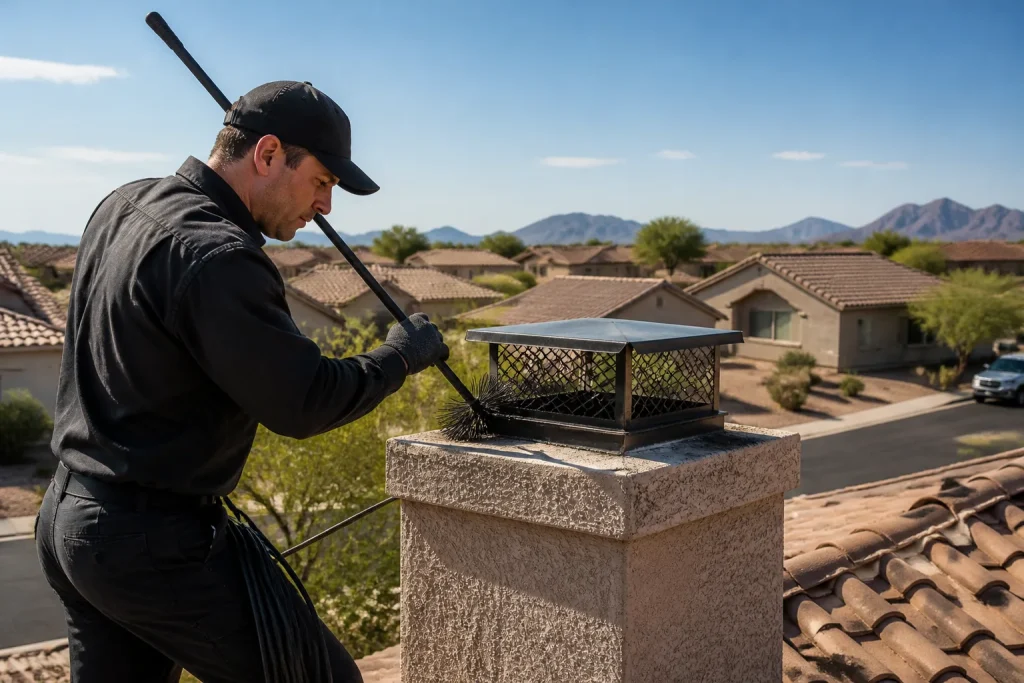
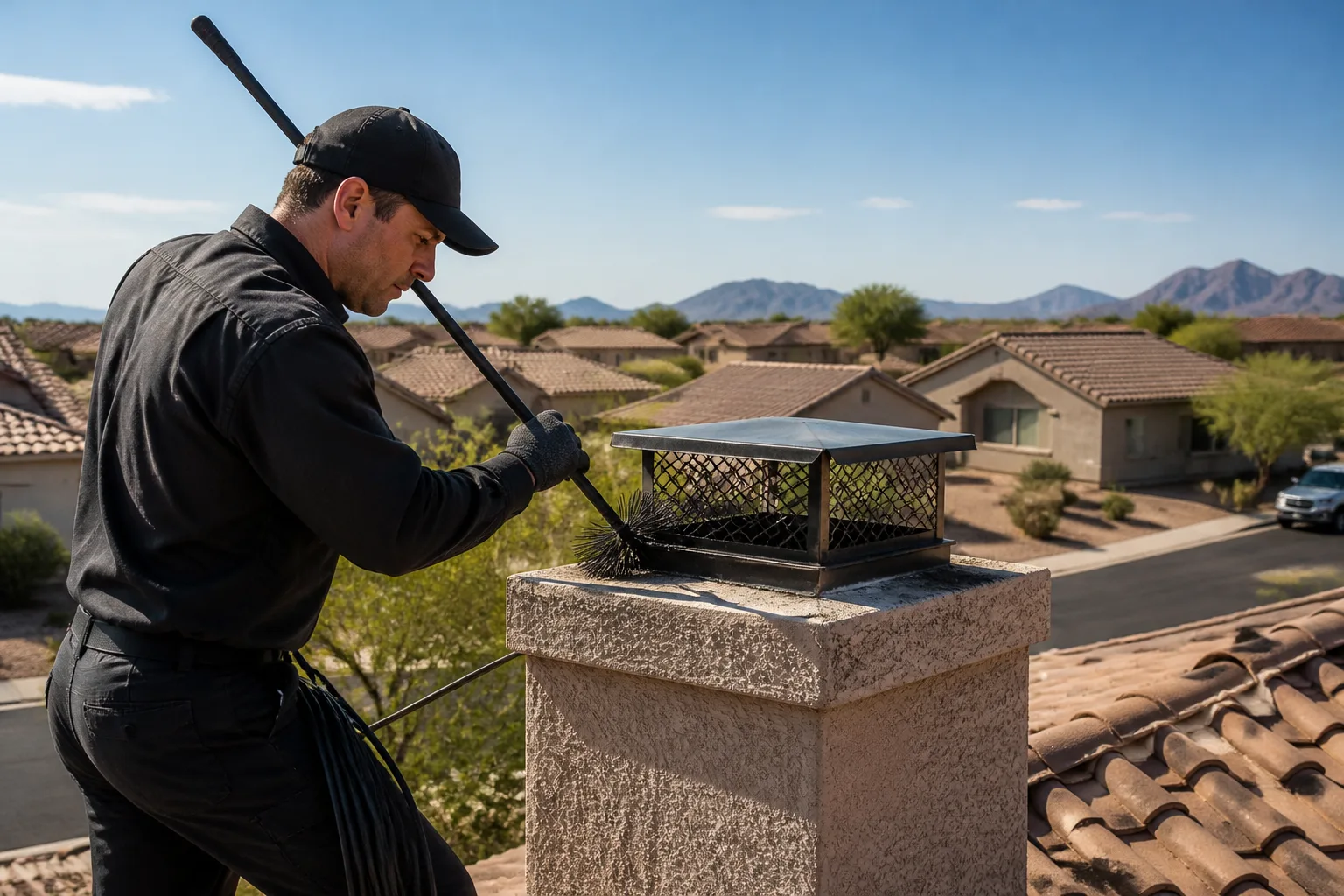
Emergency Chimney Sweep Near Me: What Surprise Homeowners Should Do First
A chimney fire sounds like a freight train running through your roof. That’s an emergency. Smoke backing into your living room when you open the damper is not, and treating it like one could land you with an urgent callout for a problem that turns out to be a closed flue or a wind downdraft. Before you search for an emergency chimney sweep in Surprise at 10 p.m., run a 90-second safety check. It tells you whether you need help tonight or can safely wait for a morning appointment.
If you’d rather have a trained eye look at it than guess, call (833) 842-7310. We answer 24/7, and fast dispatch runs 7am to 7pm, Sunday through Friday.
What counts as a real chimney emergency?
A real chimney emergency is an active fire inside the flue, a strong burning smell with visible smoke or heat where there shouldn’t be, or a sudden structural failure. Everything else – smoke spillage, a cold draft, a faint creosote odor – can usually wait for a booked appointment. Here’s the filter we give homeowners in Surprise over the phone.
Call for help now if any of these are true:
- A roaring, rumbling sound from the chimney that continues after you close the damper.
- Dense smoke or flames visible at the top of the chimney or coming from cracks in the masonry.
- Heat you can feel through the wall, hearth, or chimney breast.
- A strong, sharp creosote smell combined with smoke inside the room and no obvious cause.
- Pieces of creosote, masonry, or liner material dropping into the firebox.
Safe to book a normal appointment if: smoke rolls back only when you first open the damper, the fire draws well once it’s going, or you notice a mild odor when the fireplace is cold. Those are airflow and draft issues, not active fires.
What should you do in the first five minutes if you suspect a chimney fire?
Get everyone out of the house and call 911. That’s the whole answer. Do not try to fight a chimney fire yourself, and don’t climb onto the roof to look down the flue. A chimney fire can reach temperatures that crack clay tiles and ignite framing inside the chase, and what you see from the ground rarely tells the whole story.
- Evacuate the house and call 911 from outside.
- If it’s safe and you’re already near it, close the fireplace doors or screen to starve the fire of room air, then leave it alone.
- Don’t pour water down the chimney. The thermal shock can shatter a hot flue.
- Wait for the fire department. Once they clear the scene, you’ll need a professional inspection before you use the fireplace again.
After any suspected chimney fire, the flue needs a camera inspection before the next burn. Cracks and gaps that don’t show from the firebox can let heat reach framing. We run a camera and send you the photo report so you can see the condition of the flue for yourself.
How do you safely shut off a smoky fireplace while you wait for a sweep?
Stop using the fireplace, close the glass doors or screen, and shut the damper once the fire is fully out. That combination keeps smoke and odor in the firebox instead of your living room. Don’t seal the chimney opening permanently – a flue that can’t vent still needs to dry out, and you’ll want access for the inspection.
A few practical steps for the wait:
- Let the fire burn down completely before you close the damper. Closing it on a live fire pushes smoke into the room.
- Crack a window in the room to give smoke somewhere to go if it’s already spilling.
- Keep the hearth clear and don’t stack firewood against the fireplace face.
- Check that your carbon monoxide alarms are working. This matters most with gas inserts, where a blocked or damaged flue can send exhaust back into the room.
- Write down what you noticed: when the smoke started, whether it was on startup or mid-burn, wind direction, and any smell. That detail helps whoever inspects it pinpoint the cause fast.
Why do so many “emergency” calls in Surprise spike after a dust storm?
Because a haboob drops enough grit and debris on a chimney cap to block it, and a blocked cap looks a lot like a chimney problem from inside the house. Surprise sits in open desert where summer dust storms roll through, and when the cap clogs, the fireplace stops drawing and smoke backs up. Homeowners assume the worst and call it an emergency.
You can rule this out from the ground before you call anyone. Stand back and look up at the top of the chimney with binoculars if you have them:
- Cap intact and clear? You should see an open, unobstructed top with the spark screen in place.
- Debris piled on the cap or screen? A visible mat of twigs, dust, or nesting material is a strong sign of a blocked cap, not a failing flue.
- Cap missing or bent? Wind and debris can dislodge a cap, and an open flue lets in rain, birds, and grit.
If the cap is the culprit, the fix is usually a cleaning and a cap check, not a rebuild. When we come out for a chimney sweep, we inspect the cap and screen as part of the visit so this gets caught and corrected.
What should you tell the company when you call?
Tell them what you saw, when it started, and whether the fireplace is wood-burning or a gas insert. That one-minute description lets the company triage correctly and bring the right tools – camera, liner gear, cap equipment – on the first visit instead of scheduling a second trip.
A quick script for the call:
- “Wood-burning fireplace” or “gas insert” – it changes what they bring and how they inspect.
- What you noticed: smoke on startup, smoke mid-burn, odor, sound, or visible damage.
- When it happened and whether wind or weather set it off.
- Whether you’ve had a chimney fire or the fire department out.
- When it was last swept, if you know.
We answer 24/7, and a call outside dispatch hours is booked into the next opening, Sunday through Friday, 7am to 7pm. The estimate is free, and the price is set per job by the written estimate – no surprise fees for a call that turns out to be a blocked cap. Our technicians have up to 9 years of experience and work with professional-grade brands like Copperfield and Gelco for caps and components that hold up to desert wind.
When should you call a pro instead of troubleshooting it yourself?
Call a pro any time the fireplace is involved in a real safety question – smoke that won’t clear, an odor that lingers, a suspected fire, or any sign of damage to the flue. Chimney and venting work is one of the few home jobs where the cost of getting it wrong is a house fire or carbon monoxide exposure, so it isn’t a place to improvise.
What a proper visit covers: a full sweep, a camera inspection of the flue, a photo report you can review, and – if the inspection finds a problem – the repair on the same visit rather than a handoff to another contractor. For deteriorated flue joints and fireboxes, we use the HeatShield system to restore the surface without a full rebuild. For complex or offset flues where rigid liners won’t fit, we install DuraFlex flexible liner systems. And because dryer vents are the other fire-risk venting system in most homes, we handle dryer vent cleaning on the same visit, so one appointment covers both.
One thing worth knowing: nothing gets recommended without camera evidence you can see for yourself. If the flue is sound and just needs a sweep, that’s what we’ll tell you, and we’ll say plainly when a repair can safely wait.
Related services in Surprise: chimney sweeping, chimney repair, and dryer vent cleaning – one call covers all three. If you’re in Surprise and want to book a visit, the team at Chimney Sweep Surprise can help.
Key Takeaways
- A freight-train roar, flames at the chimney top, or heat through the wall means call 911 and get out.
- Smoke on startup, a cold draft, or a mild odor can usually wait for a booked appointment.
- After a dust storm, check the cap from the ground before assuming the worst.
- Describe the fireplace type and what you saw when you call so the right tools come the first time.
- Nothing should be recommended without camera evidence you can review yourself.
The Bottom Line
Most “emergency” chimney calls in Surprise turn out to be blocked caps, closed dampers, or draft problems that are safe to book for the next opening. A real chimney fire is a different animal – get out, call 911, and don’t touch the flue until a professional inspects it. Use the checklist above to tell the two apart, and don’t let a scary-sounding noise push you into an urgent callout you may not need.
If you’re in Surprise and need help, Chimney Sweep Surprise offers free estimates – call (833) 842-7310. We answer 24/7, with fast dispatch from 7am to 7pm, Sunday through Friday. One call covers cleaning, repair, and dryer vents, so you’re not juggling contractors while you wait.
Frequently Asked Questions
A standard chimney sweep is priced per job by the written estimate, and we don’t add an urgent-call surcharge for same-day work. The final price depends on the flue’s condition and whether a camera inspection or repair is needed. Call (833) 842-7310 for an exact quote – estimates are free.
Usually, yes. Smoke spillage is most often a draft or airflow problem – a closed damper, a blocked cap, or a cold flue – and a sweep plus an inspection generally resolves it. Only tears or gaps in the flue itself call for a liner. A camera inspection tells you which situation you’re in before anyone recommends work.
Once a year is the usual rule, and more often if you burn heavily or notice creosote buildup. In Surprise, where winters are mild and burning is seasonal, an annual sweep before the season starts catches cap damage and creosote before they become a problem. Hotter, longer burns can mean a second sweep.
Close the damper if the fire is out, open a window, and check your carbon monoxide alarms. If the smell is strong or comes with smoke, book a visit – don’t keep burning. A lingering odor often means a blocked cap or a draft issue, which a sweep and inspection can confirm. Call (833) 842-7310 to schedule an estimate.
Written by the team at Chimney Sweep Surprise.
Need Chimney Cleaning Help?
Call Chimney Sweep Surprise - licensed & insured, with free written estimates in Surprise.
(833) 842-7310